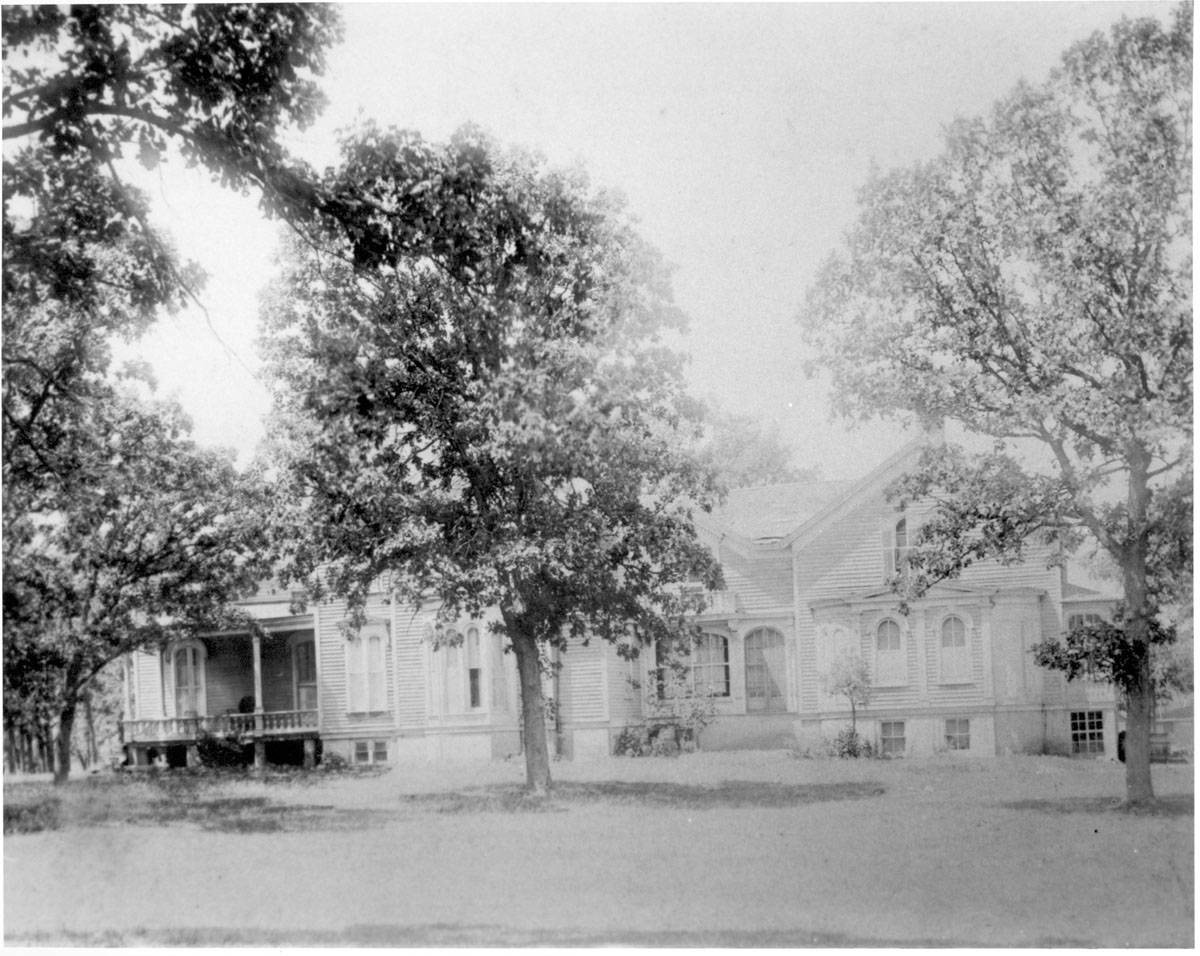
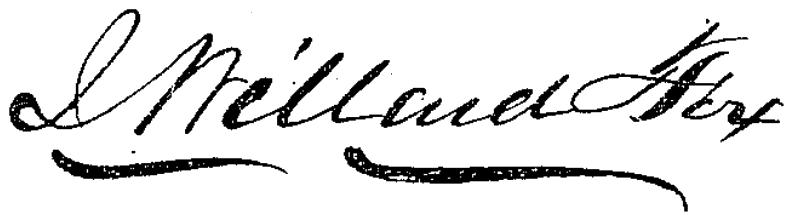
Isaac Willard Fox was born on November 6, 1821, and died on August 29, 1884. He spent the first half of his life in the New York glass industry and the second half as a Lake Zurich farmer, a Chicago glass merchant, and one of the most consequential private landowners in the history of Ela Township. The lakeshore farmhouse he built around 1859 is still standing — at 40 Mischa Court — and the elementary school that carries his name opened in 1993, 109 years after his death.[1]
A Family Built on Glass
Fox did not come from ordinary frontier farming stock. His father, Isaac Bristol Fox, had entered the glass industry in 1818 when he and partners acquired the Rensselaer Glass Factory in upstate New York. Over the following decades the business grew into a substantial family enterprise operating works at Sand Lake in Rensselaer County and later at Durhamville in Oneida County. The Fox sons — Albert R., Samuel H., Isaac Willard, and Henry W. — all came of age inside this industrial world.[2]
Isaac Willard and his brother Samuel were partners manufacturing glass in New York. He sold his interest in that partnership to their brother Henry W. Fox and retired in August 1857. The Supreme Court record is specific about this date: "before 1857, Samuel H. Fox and I. Willard Fox were partners manufacturing glass in New York. Fox sold his interest to his brother Henry W. Fox and removed to Illinois."[3]
Samuel and Henry continued as Fox & Co. Isaac headed west.
Why Illinois?
The documentary record tells us when Fox left and where he went, but not precisely why. The sequence suggests that his departure from the family glass business and his move to Illinois were part of the same decision — probably a combination of economic opportunity, the appeal of land at a moment when northern Illinois was rapidly developing, and perhaps a desire to step out of the family firm's orbit.
An 1918 history of the Lake Zurich school compiled for the Illinois Centennial records a settler called "William Fox — Glass Dealer — New York — 1858." The combination of surname, occupation, origin, and date fits Isaac Willard Fox so precisely that this entry almost certainly refers to him, with the compiler having recorded the wrong first name after sixty years.[4] Fox's own retirement from the glass partnership in August 1857 and the 1858 arrival date line up neatly.
By 1861 — only two or three years after his arrival — the George Hale county map of Lake County labeled "I. W. Fox" on a north-south tract of lakefront land in Section 20, immediately south of Lake Zurich, between the properties of J. C. Whiting and Jno. Robertson.[5] Whatever his reasons for coming, he had moved fast.
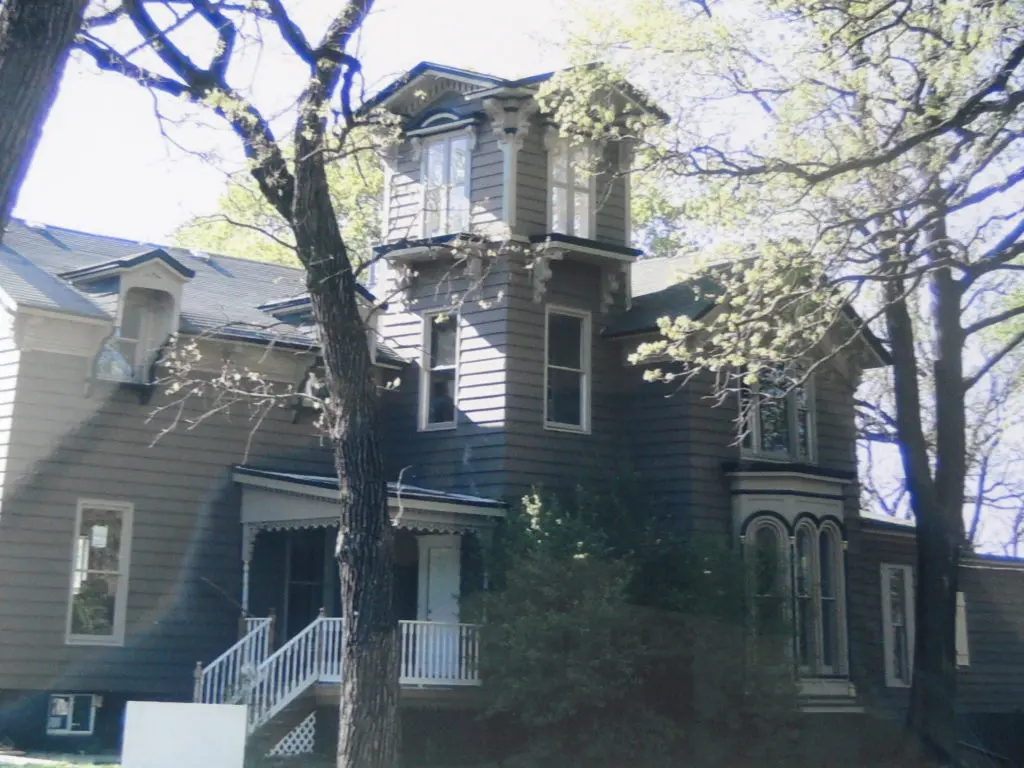
Five Hundred and Thirty-Two Acres
The word "farm" understates what Fox built at Lake Zurich. When the property was mortgaged in November 1875, the document described approximately 532 acres. An 1918 local history gave the figure as approximately 600 acres and added that Fox owned land "some upon which the lake now rests."[4] The same history stated simply: "Almost all of the present Lake Zurich was owned by Messrs. Fox and Robertson."
The 1877 Lake County directory listed him plainly: "Fox, I. W., farmer; P.O. Lake Zurich."[6] His son Isaac B. Fox appeared separately in the same directory as a Lake Zurich farmer. The entry does not capture the scale. An 1885 Ela Township atlas again labeled I. W. Fox with substantial holdings in and around Section 20 — the year after his death, his estate still dominated the map.[7]
Two Worlds: The Farm and the City
Fox was not content to farm. From 1865 onward, his brothers' firm, Fox & Co., used him as their Chicago agent to sell glass. He received large shipments from the New York works, sold them in the city, and remitted proceeds to the company. His business dealt in window glass, paints, oils, and associated merchandise. The 1866 Chicago directory listed him as "Durhamville & Dunbarton Glass Works, I. Willard Fox. 203 Lake" — his operation directly advertising its connection to the family's New York factories.[8]
He held both identities simultaneously: the landowner at Lake Zurich, the merchant in Chicago. The two-hour train ride between them was part of his weekly life for nearly two decades.
The Inventor
Fox was also an inventor. On April 23, 1872, the U.S. Patent Office issued Patent No. 125,888 to Isaac Willard Fox and David H. Irland, "of the city of Chicago," for an improvement in gas generators. Their apparatus incorporated a furnace, retort, condensers, a purifier, and a gasometer, and was intended to improve the manufacture and purification of illuminating gas.[9]
The patent establishes something useful beyond the invention itself: it confirms that in 1872, at the height of his working life, Fox was identified as a Chicago resident engaged in active technical work — not a retired man living quietly at the lake, but a working businessman with an inventor's ambition.
A Civic Gift, 1865
The clearest case for treating Fox as a foundational figure in Lake Zurich's civic history is a single transaction from February 7, 1865.
Isaac and Eleanor Fox conveyed approximately an acre of centrally located Lake Zurich land to the District 13 Trustees of Schools for five dollars — nominal consideration that made the transaction functionally a gift. The site was at what is now 95 E. Main Street. The Ela Town Hall was built there that same year. It served as both a governmental center and a school until 1914. Today the same property is home to the Ela Historical Society & Museum.[10]
"Land Fox helped place into public service in 1865 remains associated with the preservation of Ela Township's civic history more than 160 years later."
The school district whose boundaries Fox helped define ran from "the southeast corner of section number twenty" — the same section where his farm and home stood. The land he gave up for five dollars became the center of the community he had helped build.
Financial Crisis and the Supreme Court, 1869–1889
Fox's Chicago glass business collapsed around January 1869. The First National Bank of Chicago obtained a judgment against him, his store was seized, and his brothers' firm stepped in to settle his debts. On February 20, 1869, Isaac and Eleanor signed a written agreement acknowledging a debt to Fox & Co. of $70,000 — equivalent to roughly $1.7 million in 2026 purchasing power — and conveying the Lake Zurich farm and his La Salle Street Chicago property as security.[3]
The debt passed from Samuel H. Fox to Henry W. Fox, who mortgaged 532 acres of the Lake Zurich farm for a further $12,000 in November 1875. Henry died on June 1, 1876. His widow Kate W. Fox inherited his interest as sole executrix and devisee under his will. She later married Charles S. Goodwin and pursued the resulting litigation as Kate W. Goodwin — filing suit against Isaac and Eleanor Fox in February 1877.[3]
Isaac challenged the accounting throughout. He argued that the $70,000 figure overstated his true debt, that improper interest had been included, and that the assets his brothers had taken from him had been undervalued. The creditors' side argued that the written settlement controlled and that credits should reflect actual proceeds received, not later estimates of what assets might have been worth.[3]
The case was still unresolved when Isaac Willard Fox died on August 29, 1884. He was 62 years old, two months short of his 63rd birthday. His will gave his real estate to Eleanor for life, with the remainder to their six children.[3]
The U.S. Supreme Court ruled on March 5, 1889, five years after his death. The Court upheld the written settlement against Isaac's challenge and reversed the lower court's more favorable accounting. It found a balance due of $58,627.92 — roughly $2.1 million in 2026 terms — before further adjustments for the Monroe mortgage and other credits, and remanded for further proceedings.[3]
Eleanor, the Six Children, and the Subdivision
The 1887 Supreme Court proceeding named Isaac's widow and all six children: Eleanor Fox, Isaac B. Fox, Flora F. Clark, Truman G. Fox, Emily F. Beckley, Eleanor J. Fox, and Gertrude R. Fox.[11]
Flora F. Clark — Isaac's daughter — and her husband Frank P. Clark became the central figures in the next chapter of the property's history. Frank Clark had been a merchant in Lake Zurich before becoming the village's first president in September 1896. In 1898, under Flora's management, the lakeside property became "Nestlerest Cottage" — the name it would carry for the rest of its life as a public destination.
Eleanor Fox held her life interest in the former farm for years after Isaac's death. The 1900 and 1907 tax assessments listed her as the owner of Lot 2 in Kate W. Goodwin's Subdivision — the old Fox lakeshore parcel, now formally divided and named for the woman who had pursued the family through the federal courts.[12]
A Name That Endures
Isaac Fox Elementary School opened in 1993 as part of Lake Zurich Community Unit School District 95. The school sits at 395 W. Cuba Road — not on Fox's original land, but named for him as a historical figure. District 95's contemporary profile explaining the name points directly to his donation of the Ela Town Hall property in 1865 and his requirement that it remain in governmental or educational use.[1]
The other District 95 schools carry names from the same era: Seth Paine, May Whitney, Sarah Adams, Spencer Loomis. Fox belongs to that cohort — people who were present at the creation of the community, not simply residents who happened to live there.[13]
The 1861 county map may be the most evocative artifact of the whole story. There, only a few years after his arrival, on a hand-drawn map of a small lakeside settlement, is simply "I. W. Fox" — on the south shore of the lake, between two neighbors whose names the map also records, in the section of ground that is still his address in local memory more than 165 years later.
Related story
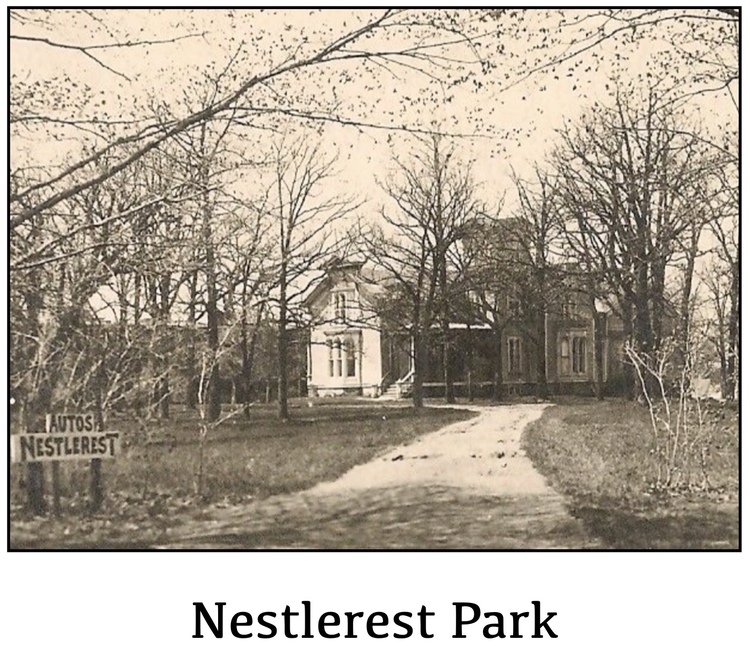
Nestlerest Park
The full story of the property Fox built — from the 1859 farmhouse through the summer boarding era, the Lake Zurich Queen, the corporate picnic decades, and the 2009 preservation that saved the original building.
Read the Nestlerest story →Sources
- Daily Herald, "Isaac Fox School" (December 18, 2007) — birth/death dates, Nesselrest spelling, public-land gift, history of Isaac Fox Elementary. dailyherald.com
- Society of Paper Money Collectors, Paper Money, Vol. LXV, No. 5 (Sep./Oct. 2026) — Fox family glass-manufacturing history. spmc.org
- Goodwin v. Fox, 129 U.S. 601 (1889) — debt settlement, Lake Zurich farm, 532 acres, Isaac's death, Supreme Court ruling. GovInfo PDF
- 1918 School Histories — Ela Township — Lake Zurich School (settlers page, "William Fox — Glass Dealer — New York — 1858"). Bess Bower Dunn Museum / Illinois Digital Archives. idaillinois.org
- George Hale / Hale & Truesdell, Map of Lake County, Illinois (1861). Library of Congress. loc.gov
- The Past and Present of Lake County, Illinois (Wm. Le Baron, 1877) — directory listing "Fox, I. W., farmer." Internet Archive
- H. R. Page & Co., Illustrated Atlas of Lake County, Illinois (1885), Ela Township plate. Library of Congress. loc.gov
- Newberry Library, Edwards' Annual Directory in the City of Chicago (1866) — "Durhamville & Dunbarton Glass Works, I. Willard Fox. 203 Lake." collections.newberry.org
- U.S. Patent No. 125,888, issued April 23, 1872 — Isaac Willard Fox and David H. Irland, improvement in gas generators. Google Patents
- Patch (Lake Zurich), "Patch Passport: Travel Back In Time" (June 10, 2011) — 1865 Fox school-site conveyance. patch.com
- Goodwin v. Fox, 120 U.S. 775 (1887) — names all six children and Eleanor Fox as widow. LII / Cornell Law
- Barrington Review, July 7, 1900 and July 12, 1907 — Kate W. Goodwin's Subdivision; Eleanor C. Fox on Lot 2. 1900 · 1907
- Lake Zurich CUSD 95 — school names. lz95.org